Network Automation Toolkit
Migrating platform service provisioning from shell scripts to Ansible: LXC bootstrap, nginx vhost templating, Netgate Unbound DNS sync, and TLS cert distribution.
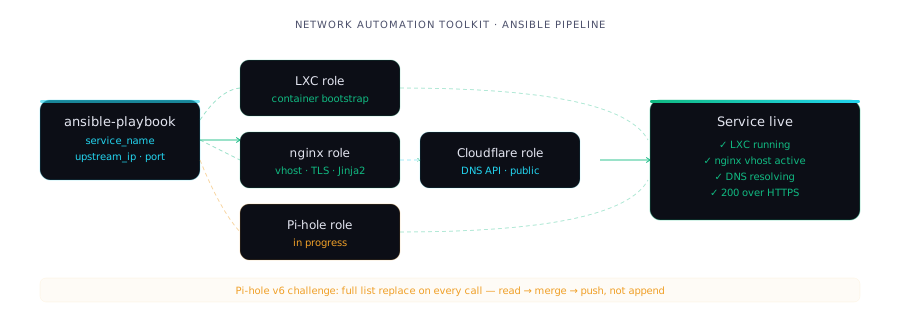
Goal
A single Ansible run that takes a service name, upstream IP/port, and protocol, then produces:
Current status
Working through the Netgate DNS role: read existing Unbound host overrides via the pfSense REST API, merge the new record, PATCH or POST the delta, then apply the resolver. The shell script version already works; the Ansible role wraps the same read-merge-push pattern.
Reproducibility
The platform is large enough that any change risks breaking something else. A playbook run either succeeds cleanly or fails loudly. not silently.
Skill progression
Everyone past mid-level is expected to read and write Ansible / Terraform / similar. This is the natural place to build that fluency on real infrastructure.
A writeup will follow once the first end-to-end run works.
Stack